Venture Capital refers to investment funds provided by individuals or firms to emerging businesses with high growth potential in exchange for equity ownership. In franchising, Venture Capital is often used to fund the expansion of new franchise concepts or to support rapid multi-unit development. Venture Capital investors seek high returns by helping franchisors scale their systems efficiently.
In the context of franchising, Venture Capital (often abbreviated as VC) represents equity-based financing provided by investors who see strong growth potential in a developing franchise brand or business model. Unlike traditional bank loans, Venture Capital involves investors purchasing partial ownership in exchange for funding, expertise, and strategic support. VC firms or private investors typically become involved when a franchisor has demonstrated early success and is ready to expand nationally or internationally. For franchisors, Venture Capital can provide the resources needed for marketing, technology upgrades, and infrastructure development. However, accepting Venture Capital also means sharing control, profits, and decision-making authority with investors who expect measurable growth and a defined exit strategy.
Additional Definition: A person or group of individuals who invest in a business venture, providing capital for start-up or expansion. 'Venture capitalists' are looking for a higher rate of return than would be given by more traditional 'investments'.
The concept of Venture Capital originated in the post–World War II era, when investors began funding promising startups in exchange for equity stakes. It became formalized in the 1950s with the creation of specialized VC firms, later fueling the rise of major technology and consumer brands. In franchising, VC interest expanded during the 1990s and 2000s as investors recognized the scalability and recurring revenue potential of franchise systems. Modern Venture Capital involvement in franchising ranges from early-stage investment in emerging brands to private equity-backed rollups of established systems. The infusion of Venture Capital often accelerates franchise growth but can also introduce pressure for rapid expansion and higher short-term performance metrics.
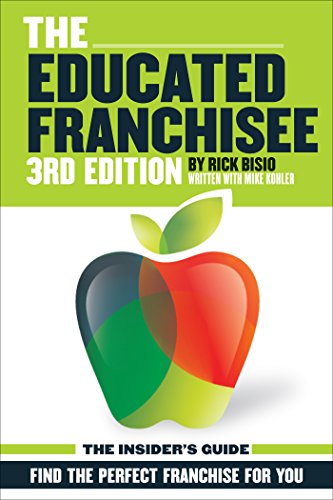
Also See: The Educated Franchisee, 3rd Edition
Venture Capital plays a pivotal role in franchising by enabling capital-intensive growth without relying solely on debt. Legally, VC investments are governed by securities laws and detailed investment agreements that define equity ownership, voting rights, and exit provisions. Financially, Venture Capital provides franchisors with funds for infrastructure, marketing, training programs, and technology systems—all essential for supporting franchisees. However, franchisors must balance investor expectations with franchise system stability, ensuring that growth does not outpace operational support or compliance. VC-backed franchisors must also maintain transparent reporting and uphold brand standards to protect both investor and franchisee interests.
| Type | Description |
|---|---|
| Seed Funding | Initial investment used to develop a franchise prototype or proof-of-concept. |
| Series A Investment | Funding to expand early operations, marketing, and regional development. |
| Growth Capital | Used to scale nationwide expansion, improve systems, and add corporate infrastructure. |
| Buyout or Rollup Capital | VC or private equity firms acquire multiple brands or franchise units to form a larger portfolio. |
| Bridge Financing | Short-term capital to prepare for an initial public offering (IPO) or sale to another investor group. |
| Aspect | Advantages | Disadvantages |
|---|---|---|
| Capital Access | Provides significant funding for rapid expansion. | Involves surrendering equity ownership. |
| Expertise | Investors offer strategic, operational, and industry experience. | May result in investor control over key business decisions. |
| Brand Growth | Accelerates development of franchise units and infrastructure. | Risk of overexpansion and dilution of brand quality. |
| Networking | Access to broader industry contacts and partnerships. | Increased reporting requirements and performance pressure. |
| Exit Strategy | Potential for lucrative sale or IPO. | Exit expectations may conflict with long-term brand goals. |
'The franchisor secured Venture Capital funding to expand into new international markets.'
'Early-stage Venture Capital allowed the franchise brand to scale its technology and support systems.'
'Some franchise systems grow rapidly after receiving Venture Capital investment but must balance investor demands with operational stability.'
| Category | Venture Capital | Private Equity |
|---|---|---|
| Investment Stage | Early to growth-stage businesses. | Established businesses seeking restructuring or expansion. |
| Ownership Stake | Minority to significant equity share. | Often majority or full ownership. |
| Risk Level | High risk, high reward. | Moderate risk, steady return expectation. |
| Involvement | Active role in management and growth strategy. | Focus on operational improvement and financial performance. |
| Exit Strategy | IPO or acquisition. | Sale to another investor or recapitalization. |
Venture Capital provides growth-oriented franchisors with equity funding to expand quickly and strengthen operational infrastructure. While it accelerates development and brings strategic expertise, it also requires careful management of investor expectations and control. In franchising, VC investment can be a powerful tool when aligned with sustainable, long-term brand goals.